
Journal · November 2, 2026 · 6 min read
Comparing Ballantyne Country Club with Piper Glen
For high-net-worth buyers evaluating established golf-oriented enclaves in south Charlotte, the selection process often narrows to two prominent addresses separated by only a few miles of the Interstate 485 beltway: Ballantyne Country Club and Piper Glen. While both represent mature, tree-lined residential communities defined by private sporting clubs and custom architecture, their underlying design philosophies, eras of development, and daily circulation patterns offer distinct living experiences. Establishing an objective methodology for comparing Ballantyne Country Club with Piper Glen requires looking past basic residential metrics to evaluate neighborhood cadence, parcel topography, architectural evolution, and the operational independence of their respective clubs.
Development Eras and Architectural Character
The historical timing of a master-planned community directly governs its architectural proportions, structural envelopes, and street-level presentation. Piper Glen emerged in the late 1980s and early 1990s as one of south Charlotte's earliest self-contained luxury golf sanctuaries. Consequently, its residential fabric reflects that transitional period of American custom homebuilding: traditional brick colonials, transitional European profiles, deep roof pitches, and heavily wooded, winding roadways that embrace the natural roll of McAlpine Creek and its tributaries. Many residences in Piper Glen offer substantial character and mature hardwood canopies, though purchasers frequently budget for programmatic floor plan reconfigurations, window replacements, and mechanical modernizations to accommodate modern residential standards.
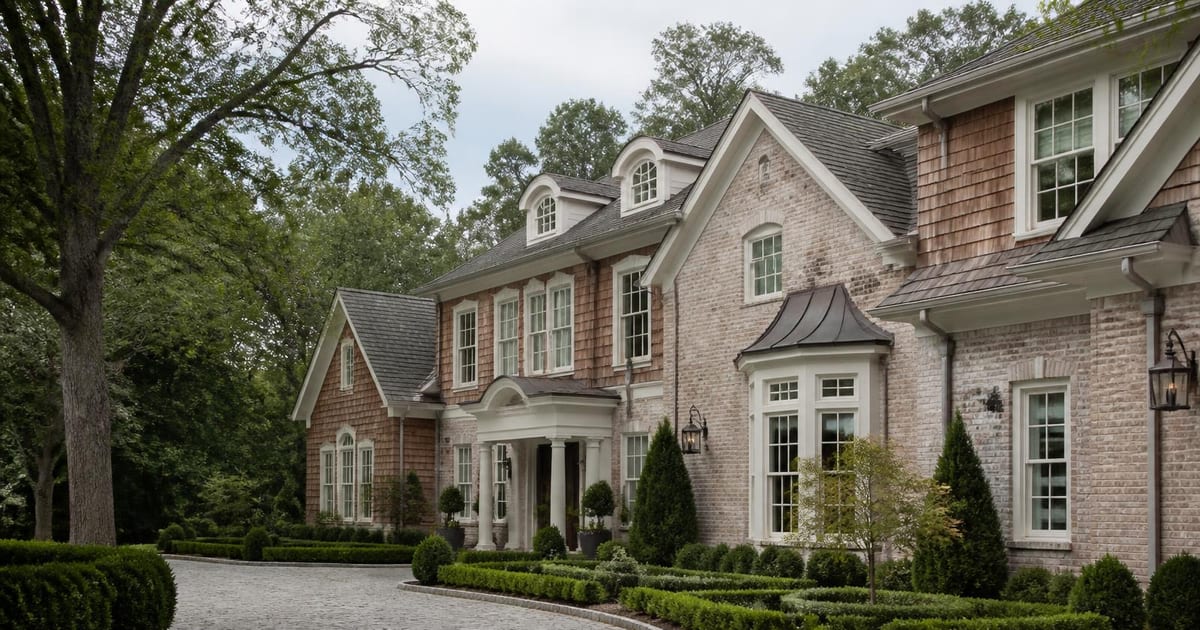
By contrast, Ballantyne Country Club was platted during the late 1990s and continued custom construction through the 2000s, reflecting a later chapter in south Charlotte master planning. The custom estate architecture here skews toward grander two-story foyers, open sightlines between kitchens and keeping rooms, integrated multi-car garages, and higher interior volume across both levels. While mature hardwoods now shade the streetscapes, the building footprints were conceived with modern spatial demands already in mind. Buyers who place a premium on sprawling main-level owner suites, dedicated sculleries, and outdoor loggias will find that Ballantyne Country Club residences typically accommodate structural modernizations with less friction than homes engineered a decade earlier.
Topography, Parcel Cadence, and Streetscape Integration
How an estate interacts with its immediate surroundings shapes long-term enjoyment. In Piper Glen, natural topography dictates the rhythm of the neighborhood. The terrain undulates noticeably, yielding dramatic walk-out basements, secluded ravine settings, and intimate pocket cul-de-sacs sheltered behind established foliage. This pronounced natural relief provides undeniable privacy, though it can limit usable, level lawn space for swimming pools, putting greens, or extended outdoor terraces.
Ballantyne Country Club, situated entirely within Mecklenburg County's 28277 zip code, presents a more uniformly navigable landscape. Engineered as an integrated golf enclave, the community features expansive boulevard corridors, gentle elevation shifts, and an interconnected sidewalk infrastructure that promotes an active neighborhood lifestyle. For buyers prioritizing flat, fenceable backyards or unobstructed fairway vistas, golf-course-facing properties within Ballantyne Country Club often provide wider building envelopes and more contiguous lot depth. The visual balance between manicured turf, buffered perimeter plantings, and broad street frontage imparts an open, manicured ambiance that contrasts with the denser, shaded enclosure of Piper Glen.
A Buyer's Framework for Comparing Ballantyne Country Club with Piper Glen
To move beyond subjective aesthetic preferences, prospective purchasers should apply a structured four-point framework when comparing Ballantyne Country Club with Piper Glen during their property search:
- Arterial Access and Daily Commute: Evaluate immediate ingress and egress. Ballantyne Country Club borders Johnston Road (US-521) and lies moments from I-485, offering seamless access to the Ballantyne corporate district, upscale dining, and western transit routes toward Charlotte Douglas International Airport. Piper Glen centers on the Rea Road corridor, positioning residents closer to established retail hubs along Colony Road, SouthPark's cultural center, and eastern commuter arteries into Uptown.
- Lot Usability Versus Natural Buffer: Clarify whether your household values raw wooded privacy over level recreational ground. Piper Glen excels in forested retreat-like parcels, whereas Ballantyne Country Club delivers larger contiguous building pads and lawn configurations optimized for modern outdoor living design.
- Renovation Scope and Capital Allocation: Assess the depth of updates required. Earlier construction in Piper Glen often calls for transformative mechanical, building-envelope, and layout overhauls. Homes in Ballantyne Country Club more commonly require selective aesthetic refinements, such as surface treatments, primary bath overhauls, and lighting updates.
- Pedestrian Connectivity and Community Layout: Consider whether your family prioritizes a walk-friendly, highly connected master plan with broad sidewalks and visible activity nodes, or prefers a secluded, winding enclave where street traffic remains exceptionally localized.
The Club Equation: Course Pedigree and Membership Independence
In both communities, it is essential for purchasers to understand that acquiring real estate does not automatically convey club privileges. Residential property ownership operates entirely separately from private club operations, waitlists, and equity structures. Buyers entering either enclave must conduct independent inquiries with membership directors regarding current initiation terms, golf categories, dining minimums, and wait times.
For golfers, the architectural lineage of each venue provides an important counterpoint. Ballantyne Country Club features a private 18-hole, par-72 championship course created by Rees Jones. Originally laid out in 1997, the course underwent an extensive 2015 redesign that reworked tees and bunkers, rebuilt the dedicated practice facility, and converted all greens complexes to MiniVerde ultradwarf bermudagrass. This strategic layout balances playability for high-handicap golfers with stern risk-reward shotmaking from the championship tees. Piper Glen centers on an Arnold Palmer design established earlier in Charlotte's golf development boom, presenting distinct challenges rooted in tighter, tree-lined fairways and natural water hazards. Touring both clubhouses, observing practice tee culture, and reviewing membership structures are foundational steps in any thorough vetting process.
Municipal Context and Educational Assignments
Because both enclaves are situated within south Charlotte, they share identical municipal infrastructure, emergency services, and proximity to leading regional healthcare facilities. However, school boundary lines differ. Public educational assignments are designated strictly by address through Charlotte-Mecklenburg Schools (CMS). While both areas are served by competitive south Charlotte public institutions, boundary lines can shift, making it critical for families to verify current feeder patterns for specific parcel addresses. Furthermore, both communities enjoy equidistant access to south Charlotte's corridor of independent college-preparatory schools, ensuring ample flexibility for families seeking private educational options.
Practical Due Diligence Checklist for Prospective Buyers
Before entering negotiations on a property in either neighborhood, ensure your advisory team addresses these specific points:
- Confirm exact property lines and local building setback limits, particularly on parcels adjoining golf corridors or community drainage easements.
- Review the community-specific architectural review guidelines governing prospective exterior alterations, roofing material approvals, paint palettes, and landscaping adjustments.
- Schedule independent structural and crawlspace inspections, paying close attention to grading, moisture mitigation, and building envelope performance across differing construction decades.
- Contact the respective membership offices to verify current roster capacity, category availability, and current approval timelines for golf, tennis, and social privileges through official channels via private club membership research.
- Review recent neighborhood comparable data across Ballantyne Country Club homes for sale alongside active offerings in Piper Glen to understand pricing variance relative to square footage and renovation quality.
- Cross-reference school assignments with Charlotte-Mecklenburg Schools directly, bypassing third-party listing portal assumptions using verified Charlotte-Mecklenburg Schools assignments tools.
Deciding between these two flagship south Charlotte addresses ultimately hinges on whether your long-term priorities align with the shaded, historic seclusion of Piper Glen or the expansive, architectural coherence of Ballantyne Country Club. To discuss discreet off-market opportunities, review recent valuation patterns, or coordinate an individualized property tour through these premier corridors, please submit your inquiry through the contact page.
More from the Journal
Continue reading
Renovation Priorities in an Established 28277 Luxury Home
Assessing a late-1990s or 2000s custom residence in south Charlotte requires balancing classic craftsmanship against modern lifestyle…
New Construction Feasibility in Established Ballantyne
Assessing new construction in mature 28277 enclaves requires balancing architectural ambition against impervious surface limits, mature…
Architectural Character of Ballantyne Country Club Homes
An architectural guide to reading the European transitional, Georgian, and French Country estates of Ballantyne Country Club, examining…